What is Cupping Massage?
Cupping massage is an ancient healing practice that uses silicone suction cups to lift and separate muscle tissue, increase blood flow, and release deep fascial restrictions. In Ho Chi Minh City, MassageGo delivers professional cupping therapy directly to your hotel room or home — sessions available in 60, 90, and 120 minutes from 500,000 VND. This decompression therapy reaches tension and adhesions that regular massage pressure cannot access, making it particularly effective for stubborn muscle knots, chronic back pain, and post-exercise recovery. Therapists combine cupping with traditional massage in the same session for deeper results. Same-day bookings are welcome — your verified therapist arrives within one hour, and you pay only after the session.
The Technique
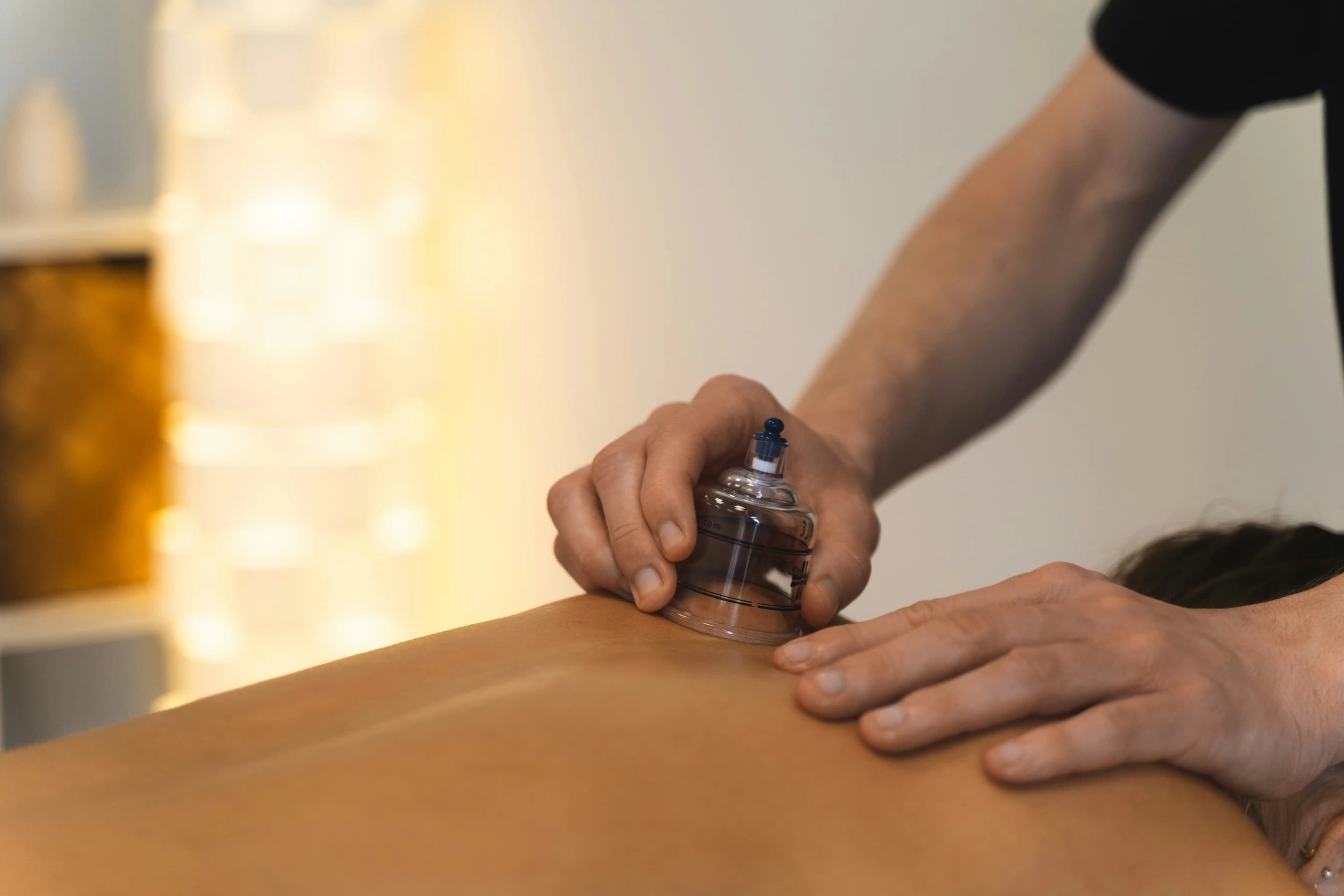
Silicone or plastic cups are placed on the skin to create suction. The cups may be left in place (stationary cupping) or moved along muscles (gliding cupping). This lifts tissue, increasing blood flow and releasing tension. Often combined with massage.
Benefits of Cupping Massage
Tension that doesn't respond to pressure — released through decompression instead
Suction lifts tissue rather than compressing it — a fundamentally different approach that reaches adhesions hands can't
Stagnant blood cleared from tight muscles
The circular marks after cupping aren't bruises — they're metabolic waste drawn to the surface, which is the intended effect
Lymphatic drainage accelerated
Effective for post-exercise inflammation and residual puffiness that doesn't clear on its own
Chronic fascial adhesions broken up
Connective tissue locked from old injuries or repetitive strain — decompression works on it in a way compression doesn't
Often combined with massage in the same session
Cupping loosens the tissue, then manual work finishes the job — the combination goes deeper than either alone
Who is Cupping Massage Best For?
- Athletes and active individuals
- Those with chronic back pain
- People with stubborn muscle knots
- Anyone curious about traditional therapies
- Those who've tried everything else
What to Expect
- 1
The therapist will explain the process and check for contraindications
- 2
Oil is applied to allow cups to glide smoothly
- 3
You'll feel a pulling/suction sensation (not painful)
- 4
Cups may leave temporary circular marks (fade in days)
- 5
The session typically combines cupping with regular massage
How to Book Cupping Massage in HCMC
Everything you need to know before you book
Booking Cupping Massage
Cupping is a specialized technique and availability is somewhat narrower than general massage — booking 3+ hours ahead is advisable, especially for same-day requests. When booking via WhatsApp, mention any health conditions or contraindications (blood disorders, active skin issues, pregnancy) so we can confirm the service is appropriate before dispatching. Cupping leaves temporary circular marks that fade in 3–10 days, so plan the booking accordingly if you have a beach day, pool session, or event where exposed skin matters in the following days. Sessions are typically combined with regular massage for a complete treatment.
Timing Your Booking
Cupping sessions are best timed around your schedule for the following 24 hours. The marks left by cupping are normal and temporary, but if you have a beach day, pool visit, or event where skin exposure matters, schedule the session after those activities rather than before. Most guests book cupping in the mid-afternoon (2–5 PM) or early evening (5–7 PM). The combination treatment (cupping + massage) runs 90–120 minutes and is more effective than cupping alone. Avoid booking cupping the same day as intense physical training — the increased circulation works best with some rest afterward. Light activity is fine immediately.
What to Expect
The therapist arrives with silicone or plastic cups, oil, and standard massage kit — setup takes 5 minutes. The session typically starts with a standard massage to warm the muscles before cupping begins. Cups are applied to the back and shoulder areas (other areas on request); you'll feel a strong pulling sensation as the suction lifts tissue — this is not painful. Cups may be moved slowly along muscle groups (gliding cupping) or held in place for 5–10 minutes (stationary). Circular marks are the normal byproduct — they indicate blood flow to previously stagnant tissue and fade in 3–10 days. Sessions almost always combine cupping with massage for a complete result. Payment is cash after.
Your Safety Matters
Our Therapist Standards
Every MassageGo therapist goes through the same screening before joining
Hotel & Spa Experienced
Every therapist has hands-on experience working in hotels and spas across Ho Chi Minh City.
Reference-Checked
We verify government ID and check references with past employers before any therapist joins.
Trial-Assessed
Each therapist completes a hands-on trial — technique, hygiene, and professionalism — before joining our team.
Basic English
Our therapists can communicate in basic English to ensure a comfortable experience for international guests.
How We Vet Our Therapists
Every therapist goes through our rigorous 4-step screening process
1
Application Review
We review each applicant's work history and confirm references from past employers.
2
ID & Reference Check
Government-issued ID verification and reference checks with past employers to confirm work history.
3
Skills Assessment
Hands-on skills test covering multiple massage techniques, hygiene protocols, and professional conduct.
4
Ongoing Quality Control
Professionalism is monitored through feedback from every customer after each session.
Transparent Pricing
Pay cash (VND) after your session — the price you see is the price you pay
What's Included
- Professional therapist
- Equipment & fresh linens
- Aromatherapy oils
- Travel to your location
No Hidden Fees
- No booking fees
- No credit card required
- No tipping expected
- No hidden surcharges
Frequently Asked Questions
Will cupping leave marks on my skin?
Cupping frequently leaves circular discolouration on the skin ranging from light pink to deep red or dark purple. These are not bruises — bruises result from blunt trauma that breaks capillaries. Cupping marks are caused by the suction drawing stagnant blood and metabolic waste to the surface, which is actually the intended therapeutic effect. The darker the mark, the more stagnation was present in that tissue area. Marks on the upper back and shoulders are most common and most visible. They typically fade within three to seven days for light marks and up to ten days for darker marks. Most people find the marks fade without any soreness. If you have plans requiring bare skin — a beach day, a special event — schedule cupping at least ten days before. Your therapist can discuss expected marking based on which areas will be treated.
Is cupping painful?
Cupping should not be painful. The primary sensation is a strong pulling or lifting feeling as the suction cup draws tissue upward — some describe it as the reverse of deep tissue massage pressure. For most people this is not painful, though it can feel intense on areas with significant muscle tension or fascial adhesions. Gliding cupping, where the cup is moved along the muscle rather than left stationary, tends to feel more like a deep massage and is generally well tolerated. Stationary cupping held for longer periods creates the strongest suction and most pronounced marks. Your therapist adjusts suction intensity throughout the session and will ask for feedback. If you find the sensation unpleasant at any intensity, the cups can be removed immediately. First-time cupping clients often request more pressure at their second session after experiencing the relief.
Who should avoid cupping therapy?
Cupping is not suitable for everyone. Do not book cupping if you have a bleeding disorder, are taking blood-thinning medications (such as warfarin), have active skin conditions such as eczema, psoriasis, or dermatitis in the treatment area, or are pregnant. Cupping should not be applied directly over varicose veins, bone prominences, inflamed or infected skin, open wounds, recent scar tissue (within three months of surgery or injury), or areas with sunburn. People with severe cardiovascular conditions or organ failure should avoid cupping. If you have cancer, please consult your oncologist before any massage or cupping therapy. For clients with diabetes or reduced skin sensation, please disclose this at booking so pressure can be kept conservative and skin monitored carefully throughout the session.
Where can I get cupping massage in Ho Chi Minh City?
MassageGo provides cupping massage across all districts of Ho Chi Minh City — your therapist travels directly to your hotel, serviced apartment, or home. No need to travel to a spa. We regularly serve District 1, District 3, District 7 (Phu My Hung), Binh Thanh, Phu Nhuan, Thu Duc (Thao Dien, An Phu), Tan Binh, and all surrounding districts. Same-day bookings are welcome and typically confirmed within 30 minutes. Book via the website or WhatsApp — your therapist arrives with all equipment included and you pay only after the session.
How much does cupping massage cost in Ho Chi Minh City?
Cupping massage at MassageGo starts from 500,000 VND for a 60-minute session in Ho Chi Minh City. Sessions are available in 60, 90, and 120 minutes — all pricing is confirmed upfront before you book. No deposit is required; you pay in cash directly to your therapist after the session. A late-night surcharge of 100,000 VND applies for bookings between 11 PM and 7 AM, always disclosed before you confirm.
Cupping Massage is Recommended For
Popular Near These Attractions
Target a Specific Body Area
Cupping Massage Pricing
Choose the session length that fits your schedule
60 min
500,000 VND
90 min
700,000 VND
120 min
900,000 VND
Price includes therapist, equipment, fresh linens, and oils. No hidden fees.
From Our Blog
Best Massage in Ho Chi Minh City: How to Choose (and What to Avoid)
A practical guide to what actually separates a good massage in Ho Chi Minh City from a disappointing one: verified therapists, real hygiene standards, transparent pricing, and how to pick between in-room delivery, hotel spas, and walk-in shops.
Read moreMassage for Musicians and Performers
How each instrument creates different repetitive strain patterns — and the targeted massage approaches that keep musicians performing without pain.
Read moreHow to Safely Book a Massage in Vietnam as a Tourist
Booking a massage in Vietnam as a tourist doesn't have to be risky. Here's how to spot the red flags and find a safe, professional service.
Read more